Small spaces can feel comfortable and welcoming, but they often become cluttered quickly. The key is not simply adding more containers. Effective storage uses overlooked areas, keeps everyday items easy to reach, and helps each room serve more than one purpose.
Whether you live in a studio apartment, a compact home, or a room with limited closet space, these practical ideas can help you create a more organized home without making it feel crowded.
Start With a Storage Plan
Before buying shelves or bins, take a quick look at what you own and how you use each room. Storage works best when it matches your daily habits.
Ask yourself:
– What items do I use every day?
– Which belongings can be stored out of sight?
– What do I rarely use but still need to keep?
– Which areas are currently going unused?
– Are there items that can be donated, recycled, or discarded?
Group similar items together, such as books, cleaning supplies, shoes, or kitchen tools. This makes it easier to choose the right storage solution and prevents you from filling your home with containers you do not need.
Use Vertical Space
When floor space is limited, look up. Walls and the areas above furniture can provide valuable storage without taking up room where you walk.
Install Tall Shelving
Tall bookcases, cabinets, and open shelves make use of vertical space from floor to ceiling. Choose a narrow design for hallways or small rooms, and place frequently used items at eye level. Store less-used belongings on higher shelves.
A slim shelving unit can hold:
– Books and decorative items
– Folded linens
– Pantry supplies
– Baskets for small accessories
– Office or craft materials
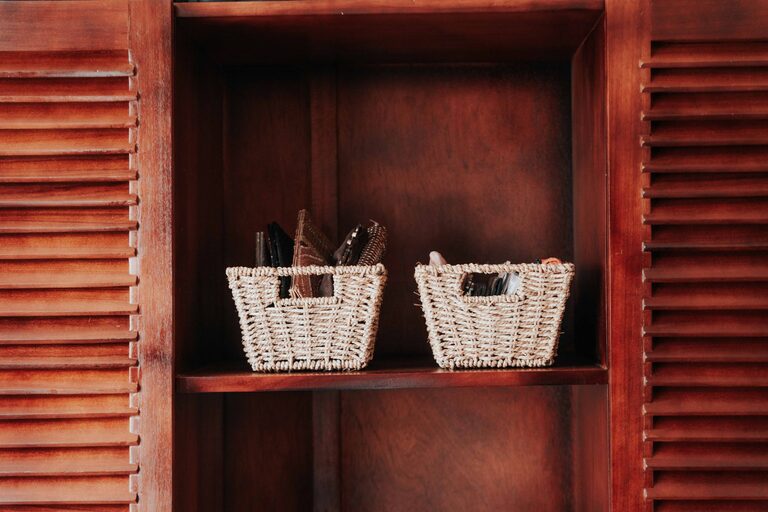
Use matching baskets or boxes on open shelves to create a cleaner appearance and keep small items together.
Add Wall-Mounted Storage
Wall-mounted shelves, pegboards, hooks, and rails can hold many everyday items. In a kitchen, a wall rail can organize utensils, measuring cups, or towels. In an entryway, hooks can hold coats, bags, and hats.
Choose sturdy mounting hardware and attach storage to wall studs when possible. Keep heavier objects on lower shelves or securely mounted units.
Make Furniture Work Harder
In a small home, furniture should ideally serve more than one purpose. Pieces with hidden or built-in storage can reduce clutter while keeping the room functional.
Choose Storage Ottomans
A storage ottoman can work as a footrest, extra seating, and a place to store blankets, games, or books. Look for one that opens easily but has a secure lid.
A bench with storage is especially useful in an entryway or bedroom. It can hold shoes, bags, or seasonal accessories while providing a convenient place to sit.
Use a Bed With Drawers
The space beneath a bed is often overlooked. A bed frame with built-in drawers provides organized storage for clothing, bedding, or luggage. If your bed does not have drawers, use low containers with handles or rolling boxes that can slide underneath.
Label containers clearly so you do not have to pull out every box to find what you need. Keep items that are used together in the same container.
Consider a Drop Leaf Table
A drop leaf table can function as a dining table, desk, or project surface and then fold down when it is not in use. This is helpful in kitchens, dining areas, and multipurpose rooms.
Pair the table with folding chairs or stackable stools that can be stored nearby or tucked beneath a counter.
Improve Closet Storage
A small closet can hold more than it seems when the space is divided into useful sections.
Add a Second Hanging Rod
If your closet has extra vertical space, a second hanging rod can double the amount of clothing storage. Use the upper rod for shirts and jackets and the lower rod for pants or skirts.
This simple change works best when clothing is not overly long. Long coats and dresses can remain on one side of the closet or on a higher rod.
Use the Back of the Door
An over-the-door organizer can store shoes, accessories, cleaning products, or small household items. Choose a style with clear pockets for easy visibility or fabric compartments for a softer look.
Door hooks can also hold robes, belts, scarves, or reusable shopping bags. Avoid overloading the door, and make sure the organizer does not interfere with opening or closing it.
Organize Shoes Vertically
Instead of lining shoes across the closet floor, use a narrow shoe rack, hanging organizer, or stackable boxes. Store everyday shoes at the front and less-used pairs higher up or toward the back.
A small tray near the entrance can also keep frequently worn shoes contained and reduce clutter throughout the home.
Find Hidden Kitchen Storage
Kitchens often have narrow gaps and unused corners that can become useful storage zones.
A slim rolling cart can fit between a refrigerator and a cabinet. Use it for spices, canned goods, baking supplies, or cleaning products. Because it rolls out, it keeps items accessible without requiring extra counter space.
Other helpful kitchen ideas include:
– Install hooks beneath cabinets for mugs or utensils.
– Use shelf risers to create a second level inside cabinets.
– Add a magnetic strip for small metal tools.
– Store cutting boards vertically in a narrow divider.
– Use stackable containers for dry goods.
– Place a lazy Susan in a corner cabinet.
Keep heavy items on lower shelves and frequently used products in the easiest-to-reach locations.
Organize the Bathroom With Simple Additions
Bathrooms often have limited cabinets, so make use of the walls and the space beneath the sink.
A narrow rolling cart can hold towels, toiletries, or cleaning supplies. Wall-mounted baskets provide storage without taking up counter space. Small adhesive hooks can hold hair tools, washcloths, or lightweight accessories.
Under the sink, use stackable bins or small drawers instead of placing items in a single large pile. Group products by purpose, such as hair care, skin care, and first aid supplies. Check that containers can tolerate moisture, and avoid storing items where leaks could damage them.
Create a Functional Entryway
Even a small entryway can have a clear home for daily essentials. A few well-placed pieces can prevent shoes, coats, and bags from spreading into other rooms.
Try combining:
– A narrow console or wall shelf
– Hooks for coats and bags
– A small shoe rack or tray
– A basket for hats and gloves
– A mirror with a shallow shelf
If you do not have a traditional entryway, create one beside the main door. A vertical arrangement uses less floor space and gives each item a designated place.
Use Containers That Fit the Space
Storage containers should fit the area, not the other way around. Measure shelves, cabinets, and gaps before purchasing bins or baskets.
Clear containers are useful when you need to see what is inside. Fabric bins can make open shelving look more relaxed, while lidded boxes protect items from dust. Choose containers with handles for high shelves or under-bed storage.
Avoid filling every container to the top. A little extra room makes it easier to put things away and prevents storage from becoming difficult to manage.
Keep the System Easy to Maintain
The best storage solution is one you can maintain without much effort. Place items where you naturally use them, and return them to the same location after use.
Set aside a few minutes each week to:
– Clear surfaces and return misplaced items.
– Remove empty packaging and unnecessary papers.
– Check baskets and drawers for items that belong elsewhere.
– Review seasonal clothing and supplies.
– Donate items you no longer use.
Small, regular resets are easier than waiting until clutter becomes overwhelming.
Make Storage Part of the Design
Storage does not have to look purely practical. Use colors, materials, and shapes that complement your room. A row of matching baskets can add texture, while floating shelves can display books and favorite objects.
Keep the most attractive items visible and place less decorative belongings behind doors or in labeled containers. With the right balance of open and closed storage, even a small room can feel organized, comfortable, and personal.