A home workspace should help you feel focused without making you feel tense. Whether you work from home full time, manage household tasks, or enjoy creative projects, a few thoughtful changes can make your space more comfortable and inviting.
A relaxing workspace is not about creating a perfect room or buying expensive furniture. It is about reducing distractions, choosing useful items, and adding details that make the area feel pleasant. With the right setup, your workspace can support both concentration and calm.
Choose the Right Location
Start by considering where your workspace will be located. A separate room is helpful, but it is not essential. A quiet corner of a bedroom, living room, or hallway can work well if it is arranged carefully.
Look for a spot with:
– Enough room for your desk and chair
– Easy access to power outlets
– Good natural or artificial light
– Limited foot traffic
– A background that feels simple and uncluttered
If you share your home with others, choose a location that gives you some privacy. Even a small divider, curtain, or open bookshelf can help separate your work area from the rest of the room.
Try to avoid placing your desk directly in a busy walkway. Frequent movement around you can make it harder to settle into focused work. If possible, position the desk so you can see the room without facing a distracting television or high-traffic area.
Select Comfortable, Practical Furniture
Comfort is one of the most important parts of a relaxing workspace. Your desk should provide enough surface area for your computer, notebook, and other daily essentials without feeling overcrowded.
When choosing a desk, consider:
– The size of your equipment
– Available storage
– The height of the work surface
– Whether the shape suits the room
– How easy it is to keep clean
A supportive chair can also make a major difference. Look for a design that allows you to sit comfortably and place your feet flat on the floor. Adjustable features are useful because they let you adapt the chair to your desk and your preferred working position.
You do not need to purchase everything at once. Start with the pieces you use most often, then improve the setup over time. A simple desk with a comfortable chair is usually more useful than a stylish arrangement that does not suit your daily routine.
Keep Frequently Used Items Within Reach
Arrange your workspace so the items you use regularly are easy to access. Place your keyboard, notebook, pens, and headphones where you can reach them without interrupting your work.
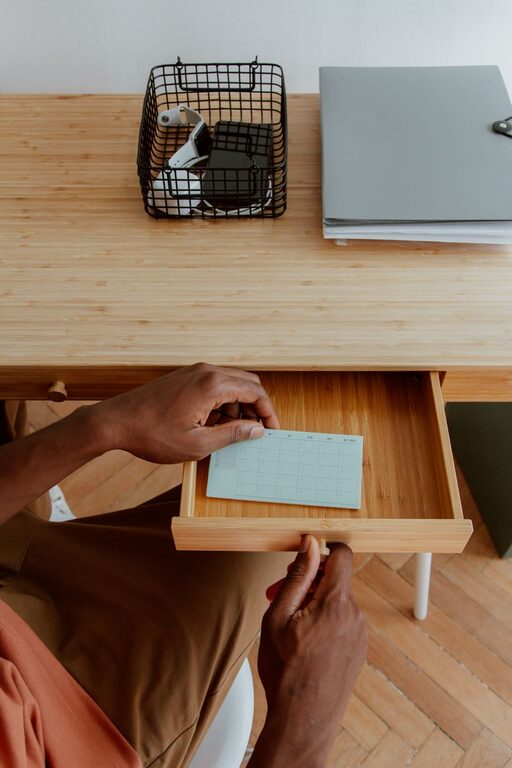
Less frequently used supplies can go in a drawer, box, or nearby cabinet. This keeps the main work surface clear and makes the space easier to reset at the end of the day.
Use Lighting to Create a Calm Atmosphere
Lighting affects the mood of a room and can change how comfortable your workspace feels. Whenever possible, place your desk near a window so you can benefit from natural light. Avoid positioning the screen where direct sunlight creates glare.
Layered lighting can make the space more flexible. Consider using:
– Natural daylight during the morning and afternoon
– A desk lamp for focused tasks
– Soft ambient lighting for the early morning or evening
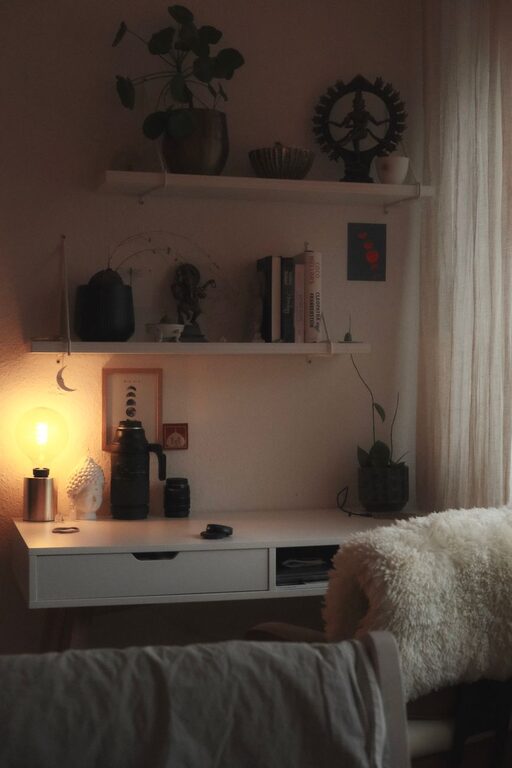
– A warm light source to make the room feel inviting
Choose a desk lamp with an adjustable angle so you can direct light where it is needed. A simple lamp with a neutral or warm bulb can add comfort without making the area feel overly bright.
Keep cords organized and out of the main work area. Cable clips, sleeves, or a small cable box can reduce visual clutter and make cleaning easier.
Reduce Visual Clutter
A tidy workspace can feel more peaceful, but that does not mean everything needs to be hidden. The goal is to create a clear, manageable environment.
Begin by removing items that do not belong in the workspace. Then group similar supplies together. For example, keep writing tools in one container, documents in one folder, and electronic accessories in a small box.
A simple organization system may include:
– One tray for current papers
– One drawer for everyday supplies
– One container for cables and chargers
– One shelf for books or reference materials
– One small area for personal items
Avoid filling every open surface with decorations or supplies. Empty space gives the room a lighter appearance and makes it easier to focus.
At the end of each work session, spend a few minutes returning items to their places. This small habit helps the workspace feel ready for the next day.
Add Natural and Personal Details
Natural elements can make a workspace feel warmer and more comfortable. A small plant, vase of flowers, wooden accessory, or nature-inspired print may be enough to soften a practical setup.
If you choose a plant, select one that suits the amount of light available and does not require complicated care. Artificial plants can also add color and texture if natural light is limited.
Personal details are useful when they create a positive atmosphere without becoming distracting. Consider adding:
– A favorite photograph
– A simple piece of artwork
– A small display object
– A comfortable desk mat
– A soft cushion for the chair
– A neutral-colored storage basket
Choose a limited color palette to create a more settled appearance. Soft neutrals, muted greens, warm wood tones, and gentle blues are often easy to combine. You can add brighter colors through small accessories if you want more energy.
Create a Clear Work and Rest Boundary
One challenge of working at home is knowing when to stop. A relaxing workspace should support focus while also making it easier to step away.
If you work in a shared room, create a visual boundary around the desk. A rug, screen, lamp, or change in wall color can help define the area. When your workday ends, close the laptop, put away documents, and turn off the task light.
You can also create a short closing routine:
- Review unfinished tasks.
- Write down the first task for the next work session.
- Clear the main desk surface.
- Put away cups, papers, and accessories.
- Turn off equipment that is not needed.
This routine signals that work is finished and helps prevent the workspace from taking over the entire room.
Use Sound and Scent Thoughtfully
Sound can influence how calm or focused a workspace feels. If outside noise is distracting, try soft background music, nature sounds, or a quiet fan. Headphones may help, but keep the volume at a comfortable level and take regular breaks from wearing them.
Scent is another optional way to shape the atmosphere. A fresh window, clean fabric, or a mild natural fragrance can make the room feel pleasant. Keep scents subtle, especially if other people use the space.
The goal is to create a background that supports your routine, not one that demands attention.
Refresh the Space Regularly
A relaxing workspace may need occasional adjustments. As your schedule, equipment, or responsibilities change, the original setup may no longer work as well.
Every few weeks, take a fresh look at the space. Ask yourself:
– Is the desk still large enough?
– Are the most useful items easy to reach?
– Is anything creating unnecessary clutter?
– Does the lighting work at different times of day?
– Does the room feel comfortable and welcoming?
Make one or two small changes at a time. Move the lamp, remove unused supplies, update a storage box, or add a small plant. Gradual improvements are easier to maintain than a complete redesign.
Final Thoughts
Creating a relaxing home workspace is mostly about making thoughtful choices. Start with a practical location, add comfortable furniture, improve the lighting, and keep the area organized. Then include a few personal or natural details that make the space feel like your own.
The best workspace is one that fits your habits and your home. By keeping it comfortable, uncluttered, and easy to reset, you can create an environment that supports focused work while still feeling calm and inviting.